Description
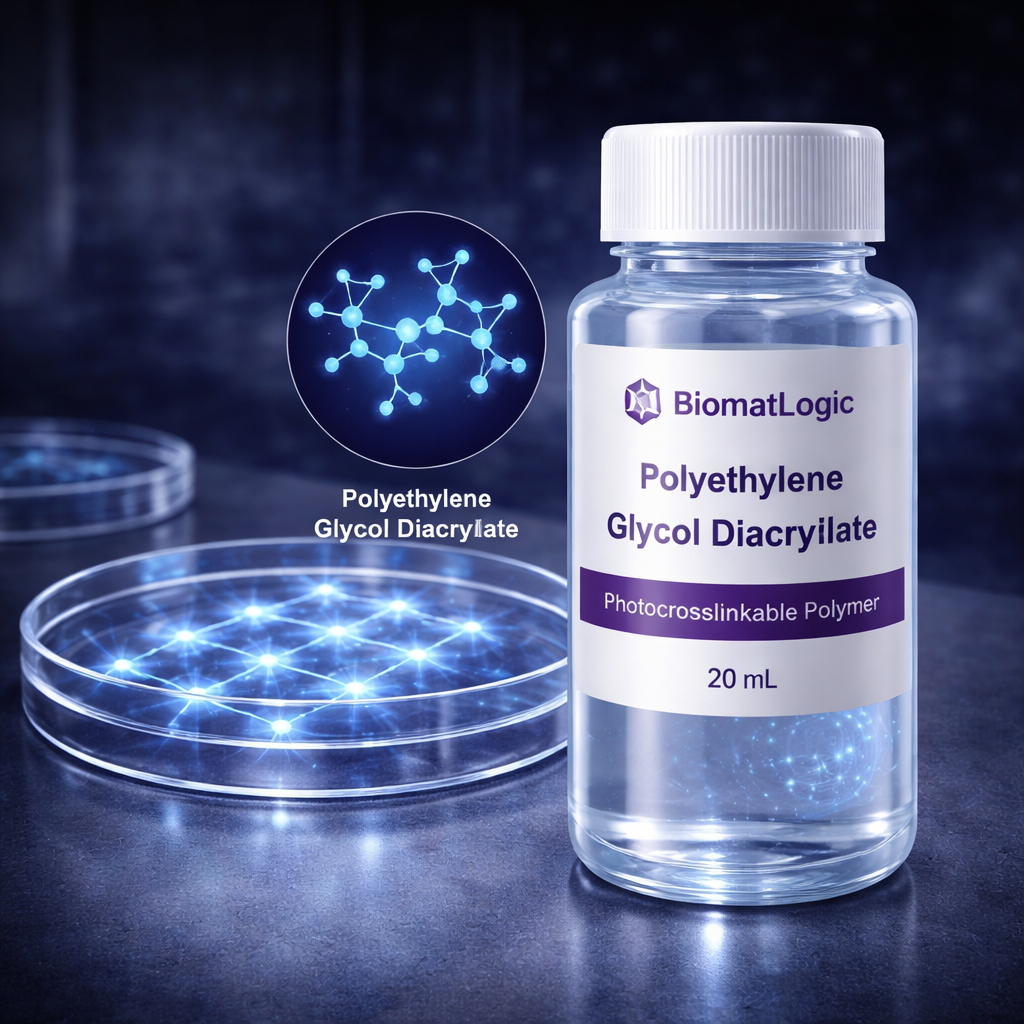
PEGDA (Polyethylene Glycol Diacrylate) is a synthetic, photocrosslinkable polymer widely used for forming hydrogels with controlled mechanical and structural properties. Upon exposure to UV or visible light in the presence of a photoinitiator, PEGDA undergoes rapid crosslinking to form stable polymer networks. The material provides a highly reproducible and tunable system, making it suitable for applications requiring precise control over stiffness, porosity, and geometry.
The polymer backbone is inherently non-fouling, minimizing nonspecific protein adsorption and enabling controlled functionalization with bioactive molecules when needed. PEGDA is compatible with a wide range of fabrication methods, including microfluidics, soft lithography, and 3D bioprinting. Its versatility and consistency make it a foundational material for engineered hydrogel systems.
Key features
Photocrosslinkable polymer system
Tunable mechanical properties
Rapid UV or visible light curing
Non-fouling PEG backbone
Compatible with microfabrication
Typical specifications
Volume 5 mL
Polymer base polyethylene glycol diacrylate
Crosslinking UV or visible light
Molecular weight customizable
Sterility available upon request
Applications
Hydrogel fabrication
Microfluidic device integration
3D bioprinting systems
Tissue engineering scaffolds
Biosensor platforms