Description
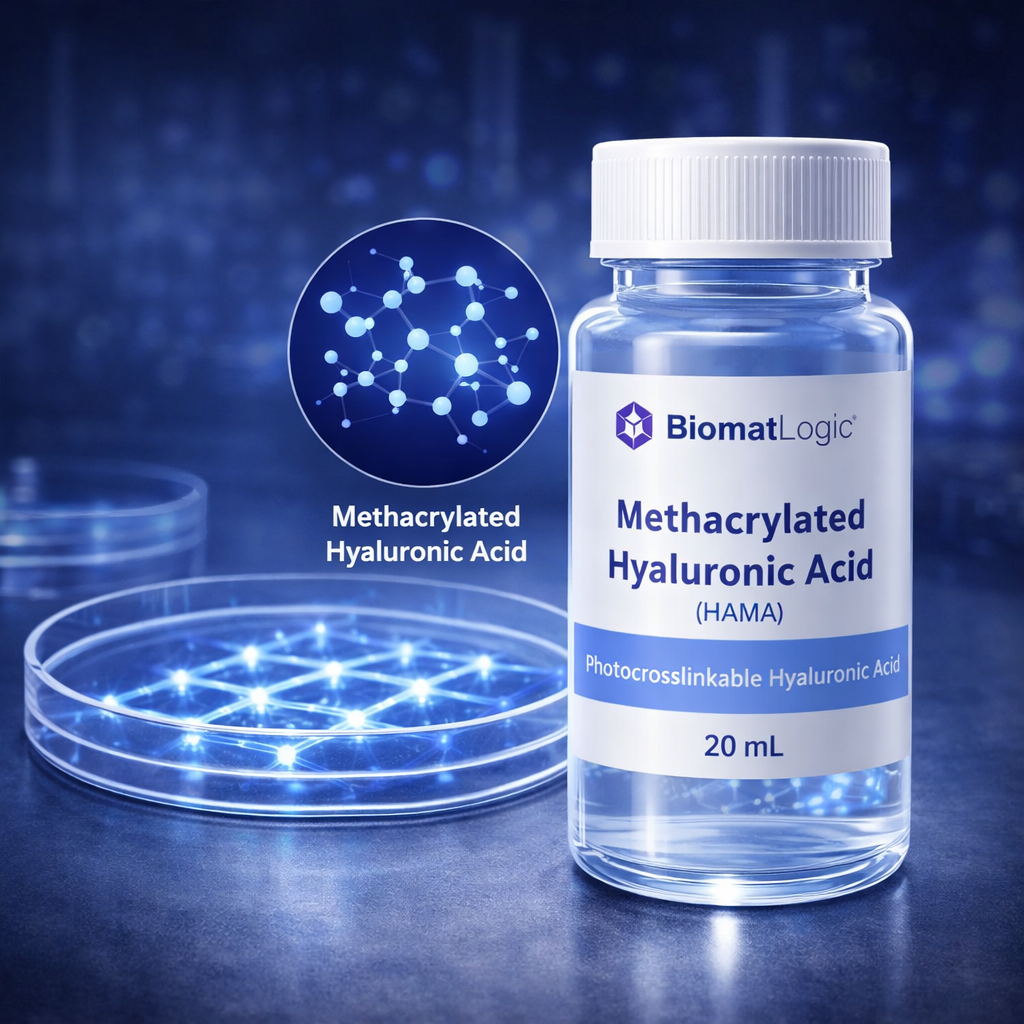
Methacrylated Hyaluronic Acid (HAMA) is a modified form of hyaluronic acid designed to enable photocrosslinking into stable hydrogel networks. By introducing methacrylate groups onto the HA backbone, the material can be rapidly crosslinked under UV or visible light in the presence of a photoinitiator. This allows precise control over gelation, stiffness, and network structure while maintaining the biological relevance of native hyaluronic acid.
The material retains the inherent bioactivity of hyaluronic acid, supporting cell interaction, hydration, and tissue-like microenvironments. It is widely used in applications requiring a balance between biological functionality and structural control. The formulation is optimized for reproducibility and compatibility with hydrogel fabrication systems, making it suitable for both research and translational applications.
Key features
Photocrosslinkable hyaluronic acid system
Biologically relevant polymer backbone
Tunable mechanical properties
Rapid light-induced gelation
High hydration capacity
Typical specifications
Volume 20 mL
Polymer base methacrylated hyaluronic acid
Crosslinking UV or visible light
Degree of substitution customizable
Sterility available upon request
Applications
Hydrogel fabrication
Tissue engineering scaffolds
Microfluidic systems
Drug delivery platforms
In vitro biological models