Description
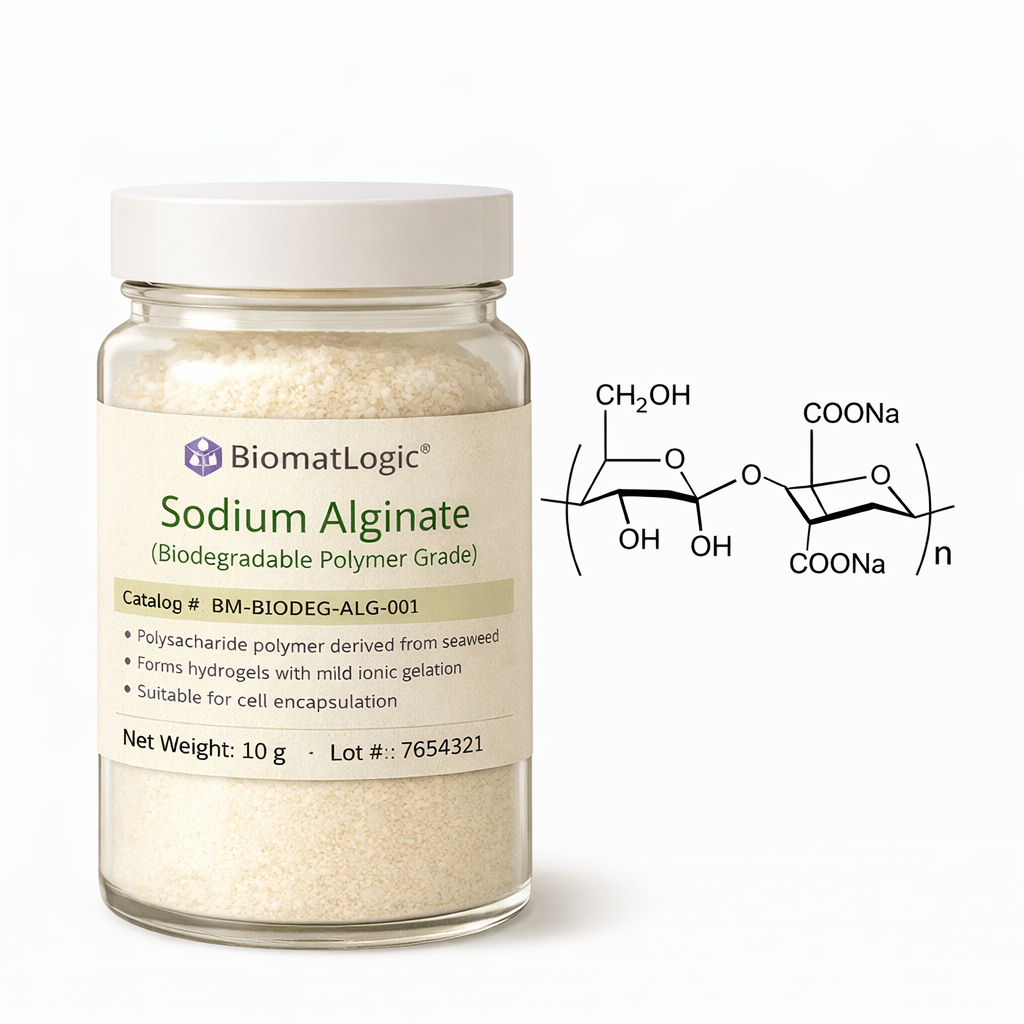
Sodium Alginate (Biodegradable Polymer Grade) is a naturally occurring polysaccharide extracted from brown seaweed, known for its excellent gel-forming ability and biocompatibility. It forms hydrogels rapidly in the presence of divalent cations such as calcium ions, enabling mild and controllable gelation without harsh conditions.
The material is highly versatile and supports encapsulation of cells, drugs, and biomolecules. Its properties, including viscosity, molecular weight, and gel strength, can be tuned to match specific application needs. Alginate is biodegradable and non-toxic, making it suitable for biomedical, pharmaceutical, and environmental applications.
Key features
Natural polysaccharide polymer
Ionic crosslinking with divalent cations
Mild gelation conditions
Biocompatible and biodegradable
Tunable viscosity and gel strength
Typical specifications
Mass 10 g
Polymer sodium alginate
Form powder
Gelation ionic (e.g., Ca²⁺)
Molecular weight customizable
Sterility available upon request
Applications
Hydrogel formation
Cell encapsulation
Drug delivery systems
Tissue engineering
Food and environmental biomaterials