Description
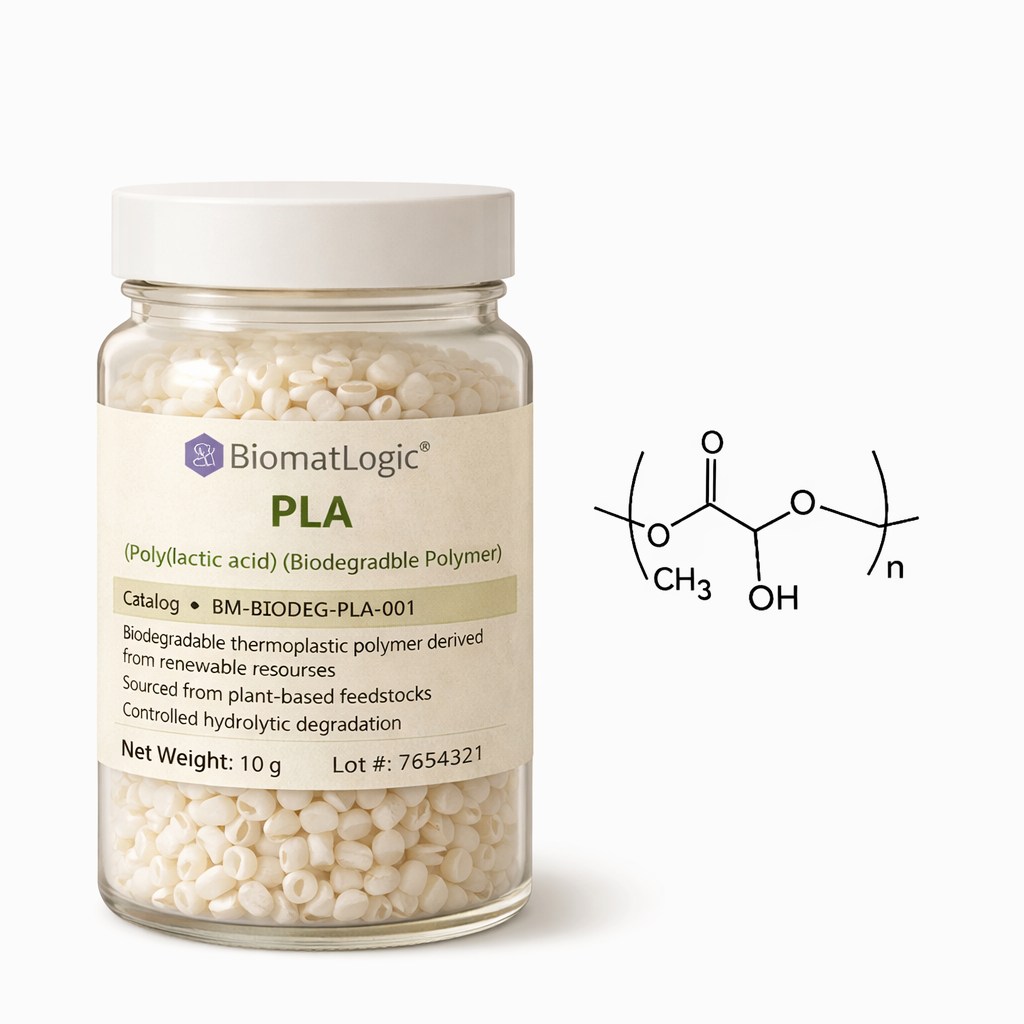
Poly(lactic acid) (PLA) Biodegradable Polymer is a renewable, biodegradable polyester derived from lactic acid, typically sourced from plant-based materials such as corn starch or sugarcane. PLA is known for its good mechanical strength, processability, and controlled degradation behavior, making it a widely used material in biomedical and environmentally sustainable applications.
The polymer degrades through hydrolysis into lactic acid, a naturally occurring metabolite, enabling safe and predictable breakdown in biological environments. PLA properties such as crystallinity, molecular weight, and degradation rate can be tuned to match specific application requirements. It is compatible with various fabrication techniques including extrusion, molding, and scaffold formation.
Key features
Renewable and biodegradable polymer
Controlled hydrolytic degradation
Good mechanical strength and processability
Tunable material properties
Biocompatible degradation products
Typical specifications
Mass 10 g
Polymer poly(lactic acid)
Form pellets or powder
Molecular weight customizable
Degradation months to years
Sterility available upon request
Applications
Biodegradable scaffolds
Medical implants
Drug delivery systems
Sustainable packaging
3D fabrication and prototyping