Description
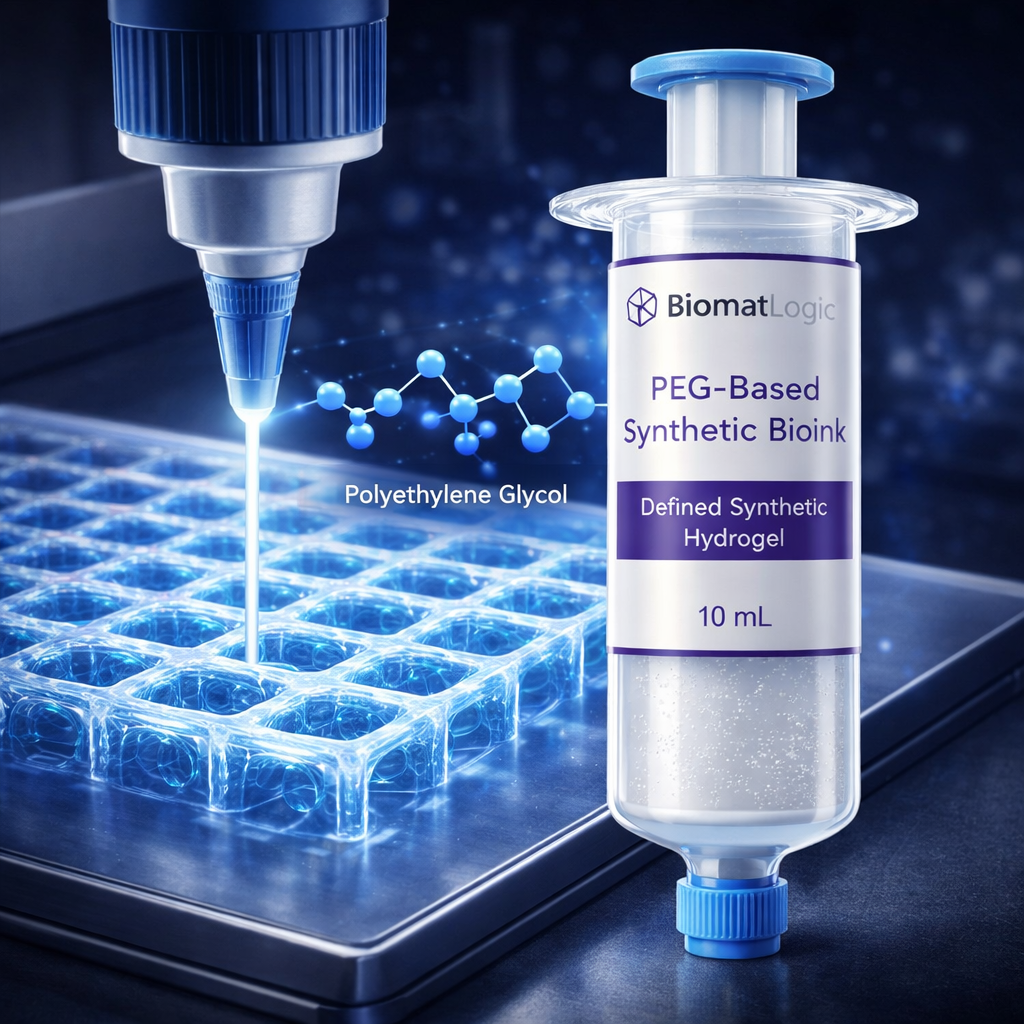
PEG-Based Synthetic Bioink is a fully defined hydrogel system engineered using polyethylene glycol as the primary polymer backbone. Unlike naturally derived materials, this bioink provides a highly controlled and reproducible environment with minimal biological variability. The formulation enables precise tuning of mechanical properties, degradation behavior, and functionalization, making it ideal for applications requiring standardized conditions.
The bioink exhibits shear-thinning behavior for smooth extrusion and supports photocrosslinking for rapid stabilization after printing. Its non-fouling nature reduces unintended protein adsorption and cell adhesion, allowing researchers to introduce specific biochemical cues through functionalization. This makes it particularly suitable for mechanistic studies, controlled cell culture environments, and engineered tissue systems.
Key features
Fully synthetic and reproducible formulation
Tunable mechanical and degradation properties
Non-fouling polymer backbone
Photocrosslinkable system
Compatible with functionalization
Typical specifications
Volume 10 mL
Polymer base polyethylene glycol (PEG)
Crosslinking UV or visible light
Viscosity optimized for extrusion printing
Sterility available upon request
Applications
Controlled 3D cell culture systems
Bioprinting of engineered tissues
Mechanobiology studies
Drug screening platforms
Functional hydrogel development